
(This page contains affiliate links and I may earn a commission at no extra cost to the reader.)
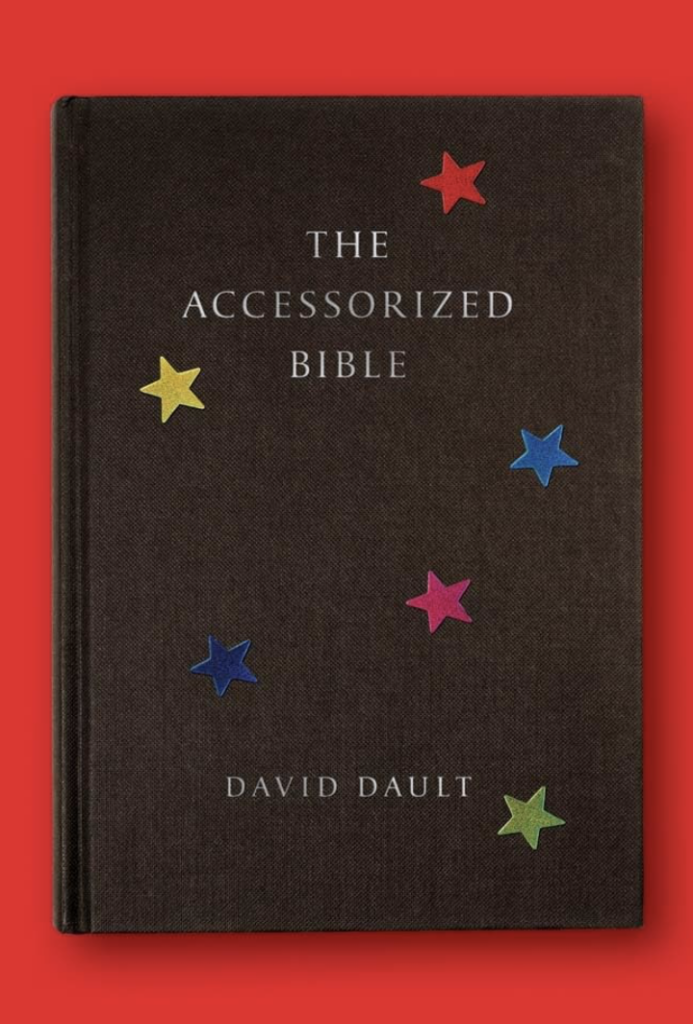
In an era increasingly shaped by profit-driven systems and public indifference toward human vulnerability, David Dault’s The Accessorized Bible calls readers to critically reexamine the assumptions surrounding the objects we identify as “bibles.” Throughout the text, Dault skillfully weaves together insights from biblical studies, cultural criticism, and material analysis, while incorporating elements of media and popular culture that help illustrate the complex social functions of the bible as an object. One of the book’s greatest strengths lies in its ability to synthesize a wide range of voices advocating for marginalized communities while grounding its analysis in both material and cultural realities. The result is a thoughtful and provocative examination of the Bible not merely as a sacred text, but as a complex social artifact.
Dault recognizes that it is often difficult to critically examine familiar objects, particularly those imbued with religious significance. Such difficulty stems not only from personal familiarity, but also from the epistemological frameworks that shape interpretation itself. Language, tradition, and inherited assumptions frequently operate beneath the level of conscious awareness, structuring how readers approach texts and religious symbols. Dault intentionally seeks to disrupt these interpretive blind spots by “defamiliarizing” bibles and encouraging readers to reconsider a bible’s role within contemporary culture. To accomplish this, he structures his argument around four interrelated theses: the Bible as book, platform, community, and accessory.
Central to Dault’s argument is his proposal of an “inclusive, liberatory” hermeneutic that prioritizes vulnerable communities and seeks to cultivate environments marked by compassion, justice, and human dignity. This interpretive approach aligns closely with the ethical teachings and practices of Jesus, particularly in its emphasis on solidarity with the marginalized. Dault challenges approaches to biblical interpretation that remain confined to traditional hermeneutical methods, advocating instead for a material-ethical framework that integrates moral responsibility with theological reflection. His project seeks to expose and dismantle structures that perpetuate harm, exclusion, or oppression.
At the same time, Dault’s emphasis on radical inclusion raises important questions regarding the relationship between orthodoxy, orthopraxy, and truth. His approach occasionally appears to privilege ethical action to such a degree that doctrinal stability and scholarly rigor risk becoming secondary concerns. While his critique of harmful structures is compelling and often necessary, the book leaves unresolved the question of how theological communities might maintain coherent truth claims while also embracing radical hospitality and openness. Some degree of shared doctrinal foundation seems necessary if ethical practice is to remain grounded rather than entirely subjective.
Nevertheless, The Accessorized Bible succeeds in challenging readers—particularly Christians who profess allegiance to scripture while neglecting the humanity of others—to engage in serious moral self-examination. In many respects, the book functions as a prophetic critique reminiscent of Jesus’s own confrontations with the religious and political authorities of his day. Dault’s concern is not merely with affirming the Bible’s authority in theory, but with examining whether believers embody the ethical demands of the text in practice. In this sense, the work emphasizes orthopraxy alongside, and seemingly at times above, orthodoxy.
The book’s insistence upon action and ethical responsibility invites readers to reevaluate long-held assumptions and to confront the tension between belief and practice. Dault repeatedly returns to the principle of love as the central criterion for Christian engagement with Scripture and society. His work encourages readers to examine their convictions honestly and without fear, especially when those convictions may contribute to exclusion or harm.
Personally, the book prompted me to wrestle with the dialectical tension between theological knowledge and lived compassion. As a Christian reader, I found myself considering the extent to which faith should be expressed through persuasion, law, or embodied love. Contemporary debates surrounding the public display of the Ten Commandments provide a relevant example. Such displays may be understood by some as affirmations of moral truth, yet by others as coercive or exclusionary gestures. Dault’s framework suggests that Christian engagement should begin not with legal imposition, but with love and relational witness. This perspective resonates with the Pauline assertion that spiritual truths cannot simply be imposed externally, but must be spiritually discerned (1 Corinthians 2:14).
The book also raises important questions about the purpose of Christian discipleship. Scripture should not merely be mastered intellectually but embodied ethically. Echoing Paul’s exhortation in 2 Corinthians 13:5 to “examine yourselves,” Dault’s work encourages believers to assess whether their lives genuinely reflect the transformative power of the gospel rather than mere conformity to religious tradition. Such an approach opens space for deeper empathy and understanding, particularly toward those outside the Christian faith. At the same time, however, orthopraxy must remain connected to some coherent theological grounding; otherwise, ethical practice risks becoming detached from the doctrinal foundations that sustain it.
Ultimately, Dault’s central emphasis on love challenges both believers and nonbelievers to critically examine the assumptions underlying their convictions. The book calls readers to pursue justice, mercy, and compassion with greater seriousness while remaining attentive to the potentially destructive consequences of rigid ideological certainty. Yet caution is also warranted. In emphasizing love as the highest principle, readers should resist the temptation to discard theological tradition altogether. A more constructive approach may involve the suspension and reexamination of inherited beliefs rather than their complete abandonment.
Despite these tensions, The Accessorized Bible is a deeply engaging and intellectually stimulating work. Dault succeeds in pushing readers beyond their intellectual and spiritual comfort zones into the “catastrophic zone” of love—a space where genuine compassion disrupts certainty, challenges established structures and demands ethical transformation. Whether one fully agrees with Dault’s conclusions or not, the book offers an important contribution to contemporary discussions surrounding biblical interpretation and the ethical responsibilities of faith communities.
Original Review: https://englewoodreview.org/david-dault-the-accessorized-bible-review/
Leslie Baynes’s Between Interpretation & Imagination: C.S. Lewis and the Bible takes us on a biblical and literary journey, offering fresh lenses with which to understand the scriptural influence on C.S. Lewis’s life and work. As a New Testament scholar, Baynes approaches this work with a scholarly eye and an investigative approach, revealing new materials that illuminate Lewis’s engagement with scripture. The author notes that this book will be of interest to those who want to learn more about Lewis, to biblical scholars who may or may not appreciate him, and to anyone who wishes to understand “how the twentieth century’s most influential writer…worked with the Western world’s most influential book.” As a lover of the Bible and an admirer of Lewis, I found this book a banquet.
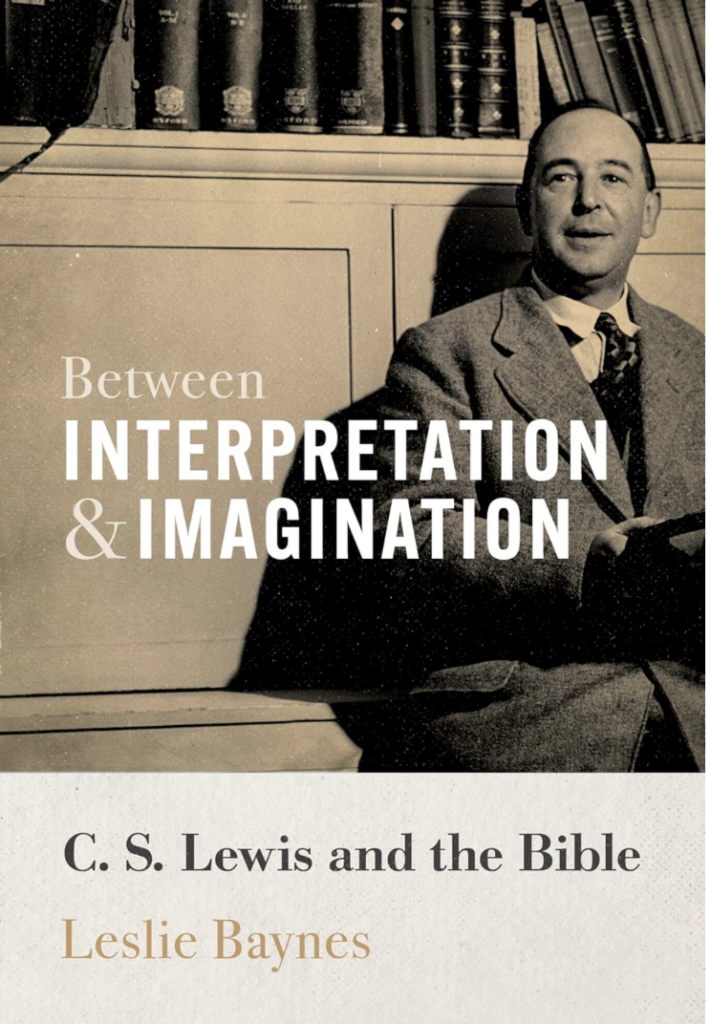
A literary figure who read voraciously, Lewis respected the Bible. His life was saturated in it. He wrote about it in letters, referenced it in his literary works, and quoted it even in casual conversations. He wrestled with it but never abandoned it. Lewis had been familiar with the Bible since youth, but when he became a Christian, he consulted now unknown biblical scholars who could offer some guidance. It was enlightening to see the genealogy of Lewis’s influences, particularly from Church of England bishop Charles Gore, with whom Lewis ended up sharing major similarities on theological viewpoints; for example, Gore also believed that myth was a mode of apprehending truth. Even though Gore and others informed Lewis’s work, Baynes shows how Lewis deviated from them, not always in a good way.
Lewis could be considered a harmonizer, not dwelling in the weeds but seeing the forest—a rich forest of Christian core teachings upheld by the Church for centuries. Unlike biblical scholars of his day, Lewis minimized gospel differences. Rather, he approached the Bible as a literary work, convinced some parts were fictional. This literary instinct allowed Lewis to read scripture less rigidly, though he still believed that the Bible was God’s word. Christians today may feel as though they must belong to either a rigid literalism or hold skeptical criticism, but Lewis did not fit neatly into either camp.
While Lewis sought to harmonize, he failed to do his scholarly due diligence. According to Baynes, C.S. Lewis may have had on scriptural blinders. This caused him not to check his sources but instead rely solely on memory which, at times, could be faulty. In her investigation, Baynes scrutinizes Lewis’s mishandling of sources and is just as stumped as the reader about why he did so. Yet Baynes does not treat these failures as grounds for dismissing Lewis’s authority altogether. Instead, she presents him as a gifted lay theologian whose influence far exceeded his formal training. In this sense, Lewis inadvertently shows the responsibility that Christians bear for proper biblical interpretation and avoiding biases. Ultimately, Lewis’s blunders make him more relatable—both as a flawed human being who made mistakes but also as a layperson struggling to make sense of the Bible.
While his flaws came out in biblical interpretation, his strengths flourished in his imagination. Here we arrive at the glorious way Lewis infused The Chronicles of Narnia with Scripture, not by writing allegory, which Lewis explicitly rejected, but by embodying biblical truths through story. Lewis developed relatable and fantastical characters who exercised free will while encountering challenges amidst a battle between good and evil. Baynes highlights different themes found in each chronicle, showing how Lewis strategically uses Scripture and other literary devices in his narratives. To the reader’s delight, Baynes shows the masterful ways that are not so obvious—the subtle minutiae—that Lewis weaves into The Chronicles. Thus, Baynes makes clear that Lewis’s imaginative retelling of biblical truth was not accidental but intentional. Through Narnia, Lewis trains readers to recognize truth, goodness, and beauty even before they can define them. Long after theological debates fade, the fierce and lovable image of Aslan remains, shaping readers’ minds.
Baynes finds a good balance between being critical and showing Lewis at his best. While this is a serious scholarly work, it is readable and engaging. Many insights emerged as I read this book; primarily that for Lewis, the true logos was not the written word but the living Word, which would trickle over into his fiction works. This distinction is crucial for understanding both Lewis’s strengths and his limitations. Despite his neglect of proper scholarship, Lewis continues to have influence because he chose, as Baynes notes, “to err…on the side of love.” Lewis is a human being with creaturely weaknesses like all of us. He shows us what not to do, but also what to do, and most importantly, shows us to the Logos himself.
Original Review: https://englewoodreview.org/leslie-baynes-between-interpretation-and-imagination-review/
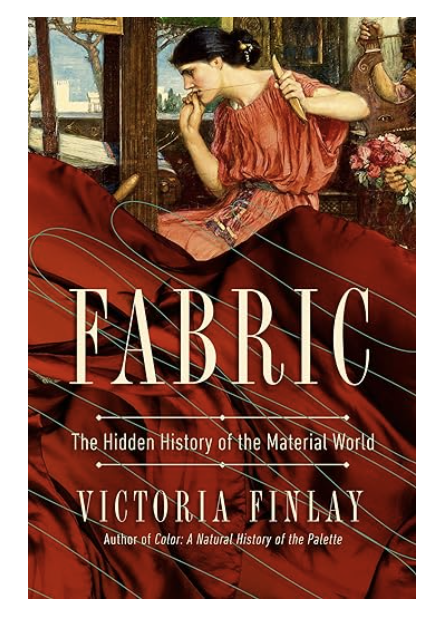
Victoria Finlay’s Fabric: The Hidden History of the Material World is itself a beautiful tapestry of a work, woven together to unfold a hidden but powerful history of fabrics. Yet the book is more than a history of fabrics—it draws out the human spirit and culture deeply embedded in fabric making, from simple sewing to more technological production. Finlay gives the right amount of context for every part of the narrative, including key major historical moments that have shaped fabric production and development. The book includes tidbits on mythology, spirituality and theology, which adds further dimension and enrichment. To top off the pattern, the author shares her own vulnerability as she undergoes a journey of healing from the recent loss of her parents.
In her work, Finlay gives us a generous portion of fabric sampling such as, but not limited to: Barkcloth, which “emerges fully formed from the tree; the design of it emerges fully formed from its maker’s mind” (56); “Cotton has this lightness, this quality of being drawn into fine threads, that is like its magic” (74); Pashmina: “pure pashm is only from the belly” (203); Silk: “Other natural fabrics—linen, jute, hemp, cotton, barkcloth, horsehair, wool—come from a crop, a growth event, a haircut. But silk? Silk is a miracle” (377); Sackcloth: Besides its practicality in containing things “sackcloth has a secondary reputation. It’s the fabric of penitence” (245); Linen “in a way is the purest fabric…it was also the fabric that priests wore” (298). These fabrics have undoubtedly held powerful clout in the history of humanity.
Fabrics have proven to be a major powerhouse, enabling great feats and helping to overcome financial difficulties. Multiple inventors, entrepreneurs and visionaries have been involved with fabrics, and worked to develop and tweak machinery to further expedite fabric production. Some of these individuals stood in the background but nevertheless planted the seed while others built on it. Furthermore, fabrics allowed for countries to move forward. For example, while other countries were experiencing issues with their silk supplies, “it was raw silk that helped Japan control its runaway inflation…[and] build up a trade surplus…silk kept delivering” (373). In addition, fabrics have served to push forward the economy in many different ways; for instance, by enforcing that certain clothing be worn for different purposes, the need for fabrics increased.
Just like fabrics have been interwoven in human lives since the beginning of time,Finlay also infuses her fabric journey with her personal healing journey, her humanity being the stitch that holds both parts together. She carries the memories of her parents near and dear. Her mother especially, though deceased, becomes very present in her journey: “the scene…fell away as if it was itself a dream, and to my surprise I found myself talking to my mother” (65). The book journeys through various parts of the world, even stopping at past points in time. She is not only an observer but a willing participant, which is human experience at its core. She is not afraid to try, even if she fails: “ ‘Mould it between your fingers,’ she says, sighing at my ineptitude…And she shows me again. And again. And again…I still can’t spin. But I have learned something about connecting” (73). Finlay lets us sit with her, walk with her, observe with her and learn with her. We overhear conversations that she has with various people, which proves to be fundamental to her journey of learning and discovery.
The theme that permeates the book is how things are connected, bringing different elements—culture, etymology, fabric making, storytelling—together. For instance, “in India, many sacred words are also textile words. Tantra, or sacred text…suggests patterns that are woven. Sutra, or sacred saying…[is] an allusion to connecting ideas. Grantha, meaning script or holy book, is from a word for knotted thread” (81). Throughout her journey, Finlay discovers the intimate connection and spirituality embedded in the fabrics themselves used to make clothing. She writes, “clothing was not just about fashion or display or prestige or practicality or even rank. It was, sometimes, about achieving an actual connection, through material, to a world beyond the material” (352). Besides the spiritual beyond the material, the one cannot separate fabrics from the people and the culture. In fact, the origination and development of clothes has been in direct conjunction with people and culture. Thus, nothing exists in complete isolation; one idea, event in time or person/persons affects another and the cycle continues.
While the book presents a lightness to the world of fabric, it does not obscure the dark side of the industry. Various practices in fabric production have been unjust; poor working conditions, issues of slavery and child labor are all costs that are too high. Furthermore, technological advances have been a blessing and a curse. Much like today, technology may automate certain processes but also leaves people without jobs. Another relevant issue to be noted is the harmful effect that certain materials have on the environment. In the same vein, Finlay discusses how fabrics may be repurposed or upcycled. Lastly, though many women have faced hardship in working with fabrics, fabric has also given women a voice and the ability to rise above their circumstances.
Although a hefty book, Finlay engages the reader through personal trajectories, keen observations, interesting historical narratives and illustrative examples. Reading this book was like being on an adventurous trek with the author—I was there as she picked up various tools to work with materials, explore the lands, talk with various people, and was simply present in every moment. This book turned out to be an enjoyable read and a deep learning experience. It enriched my understanding of the unraveling of fabrics and even for history itself. It opened my eyes to the hidden history of the materials by which we come to clothe ourselves and gave me a deeper appreciation for the intricate ways that fabric exists in our lives.
Original review: https://englewoodreview.org/victoria-finlay-fabric-review/