
What are mere mortals that you should think about them,
human beings that you should care for them?
Yet you made them only a little lower than God
and crowned them with glory and honor.
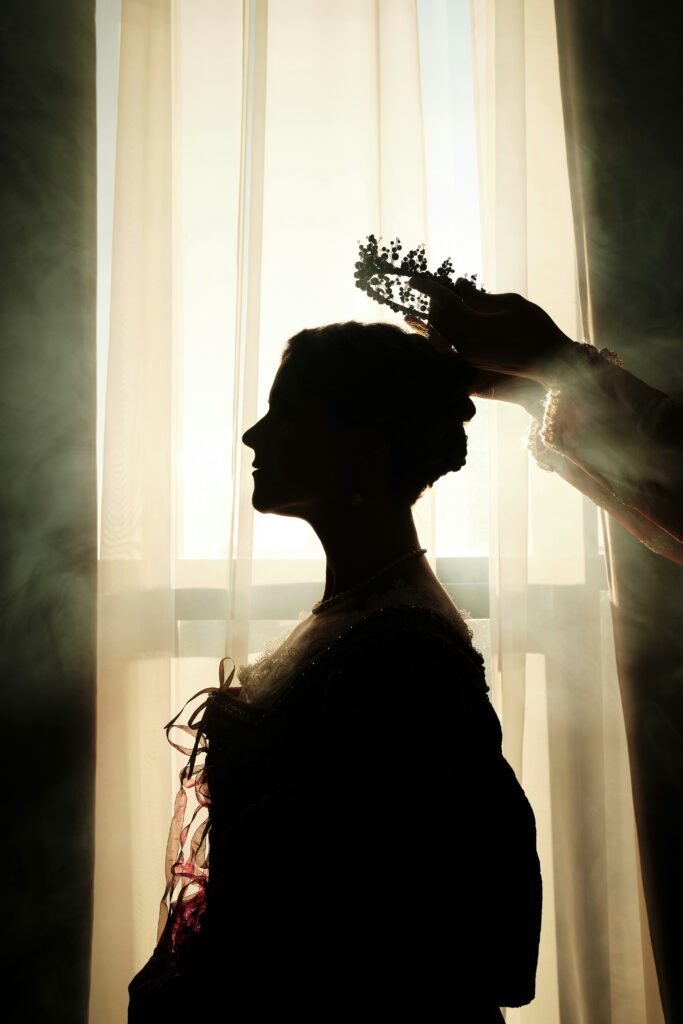
In Mere Christianity, C.S. Lewis writes: “If I find in myself a desire which no experience in this world can satisfy, the most probable explanation is that I was made for another world.”1 For Lewis, these unfulfilled tinges of longing point to something that exists beyond this earth. Nothing on earth can fully satisfy that desire. In The Weight of Glory, C.S. Lewis connects glory to that desire: “the promise of glory…becomes highly relevant to our deep desire. As creatures made in the image of God, we long for glory because God bestowed glory upon us…[it] means good report with God, acceptance by God, response, acknowledgment, and welcome into the heart of things.”2 Lewis gives the example of a child eager to please. Thus, we come to God as children eager to please our father. We want to be seen and acknowledged by Him. We want God to smile on us, to make His face shine upon us.
As earthlings who live in a material world, we encounter objects (physical like books and nonphysical music) everyday. Some of these objects contain beauty that suggest their source coming from another world: “The books or the music in which we thought beauty was located will betray us if we trust to them; it was not in them, it only came through them, and what came through them was longing. These things—the beauty, the memory of our own past—are good images of what we really desire.”3 These good images point to something greater. But Lewis goes further: “we do not want merely to see beauty…we want something else which can hardly be put into words—to be united with the beauty we see, to pass into it, to receive it into ourselves, to bathe in it, to become part of it.”4 Our humanity desires more than to perceive beauty, we want to participate in beauty. Interestingly, the world of fashion may be a gateway through we can participate.
Fashion (clothing, accessories we see and wear) has the unique ability to transform a space into another world, while also being able to transform humans into better (or more interesting) versions of themselves through dress. Whether we experience it via the runway or by wearing it, fashion can even become an art form, and art “lets us behold only scattered images that help us gauge and grasp something of what will appear in the kingdom of glory.”5 Fashion amply provides “good and scattered” images, and these images are not static but alive and occurring in the moment. We can spot these images on the fashion runway (from the background to the visual decorations, the music and lights to the often-extraordinary clothing and accessories worn). It’s almost like a fairy tale that’s brought to live animation. Fashion runways allow for the ultra-magical with their theatrical atmosphere, and models who embody the clothing come to life on the runway. We can also catch glimpses of glory by seeing exhibitions that demonstrate the power of fashion through dress and accessories, such as the Heavenly Bodies exhibition.
Fashion in the sense of having the proper elements of beauty and splendor, can allow us to put on beauty. Thomas Aquinas defined beauty as having three conditions: “integrity or perfection, due proportion or harmony, and brightness or clarity.”6 Dolce & Gabbana’s wedding ensemble (image below), shows the integrity and perfection in its masterful construction, excellent craftsmanship and use of fabrics. One can clearly see the proportions and harmony in the way the dress comes together with its gold, lace detail and the embellished bodice that complements the similarly decorated crown which holds a long veil that drapes elegantly down the sides. The brightness and clarity emanates forth from the gold and shiny overall ensemble as well as the luster of the colorful jewels.
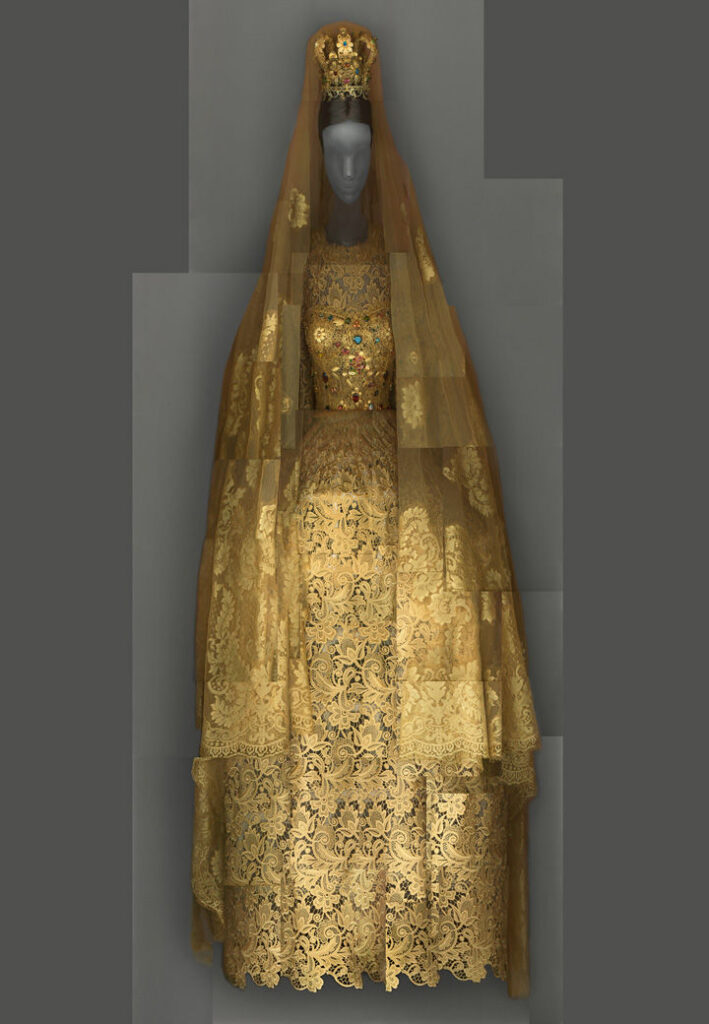
Something magical happens when we put on beautiful, elevated attire. We become united with beauty; we can become part of it. A beautiful outfit not only can enhance our image; we can become part of a good image itself. Beauty becomes incarnational. And that’s powerful.
Putting on means that we were previously lacking. We didn’t have the proper clothing or clothing at all to wear on our bodies. The clothing and accessories add dignity to otherwise naked flesh which signifies carnality in body and spirit. That is, we were not supposed to be ashamed of our natural nakedness pre-fall. God Himself provided the first coverings and thus has set the precedent of being clothed. That is the basic need of clothes: to bring dignity and propriety to humans. Fashion not only covers us, it provides a respite from an otherwise harsh world. But, on a larger scale, it can bring something bigger. As humans crave the glory that God bestowed upon them, they can use fashion as a viable means to be seen and acknowledged. Fashion can glorify humans on an earthly level. Fashion allows visibility of the self, as it seeks glory (not self-aggrandizement) but to be acknowledged as a valuable human being.
When one person sees another and appreciates the beauty and symmetry of his or her outfit, that validation further seals the unity and value of humanity. There is a communal aspect in wearing beauty: we not only dress well for ourselves but for others, it is a kindness and respect given to our fellow human beings. Most notably, when we dress well for church services, it indicates that we are going to a special place. We are going to meet with our heavenly Father, and through our appropriate and attractive dress, we honor Him. Thus, we glorify our Father through our dress because we reflect beauty in ourselves, reflect it to others in our proximity and ultimately back up towards Him.
- Lewis, C.S. Mere Christianity, pp. 136-37.
- Lewis, C.S. The Weight of Glory.
- Ibid.
- Ibid.
- Kuyper, Abraham. Wisdom & Wonder, pp. 144-45.
- Aquinas, Thomas. Summa Theologica, Q. 39, Article 8.