
In David Dault’s thought-provoking book, The Accessorized Bible, Dault sets out to examine bibles as objects and how external factors play a role in their existence. In the chapter, “Fourth Thesis: A Bible is an Accessory,” Dault writes that bibles themselves can be accessories. Here, the behemoth domain of fashion interacts with the bible as an object. While there are multiple layers to examine separately in that chapter, the attraction of bibles to consumers/seekers is one to explore here.
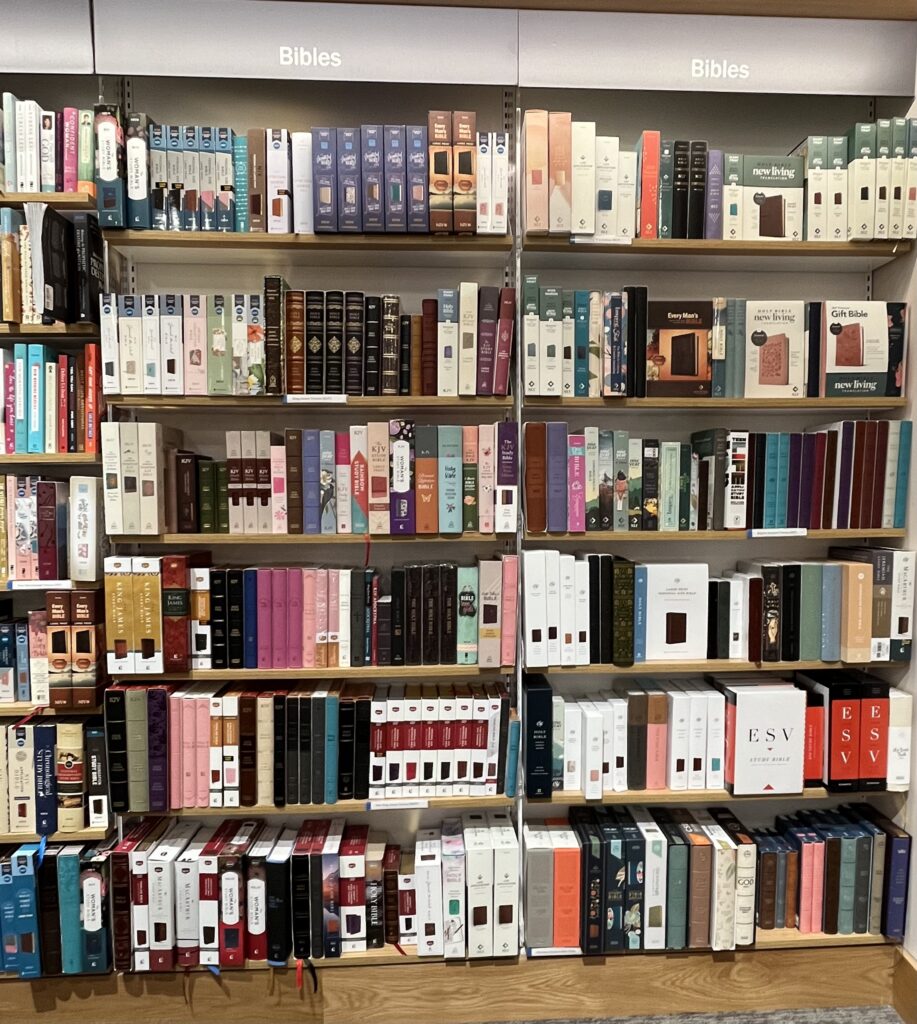
Dault notes that when producing a line of bibles, book publishers ask the same questions as those in clothing design, which is based on customer need and filling gaps. There is a desire for intimacy between the customer and God’s word and the publishers work to fill that need. Listening to customers’ needs led Thomas Nelson publishers to branch out from traditional “black-bonded” bibles to bibles that better appeal to customers.
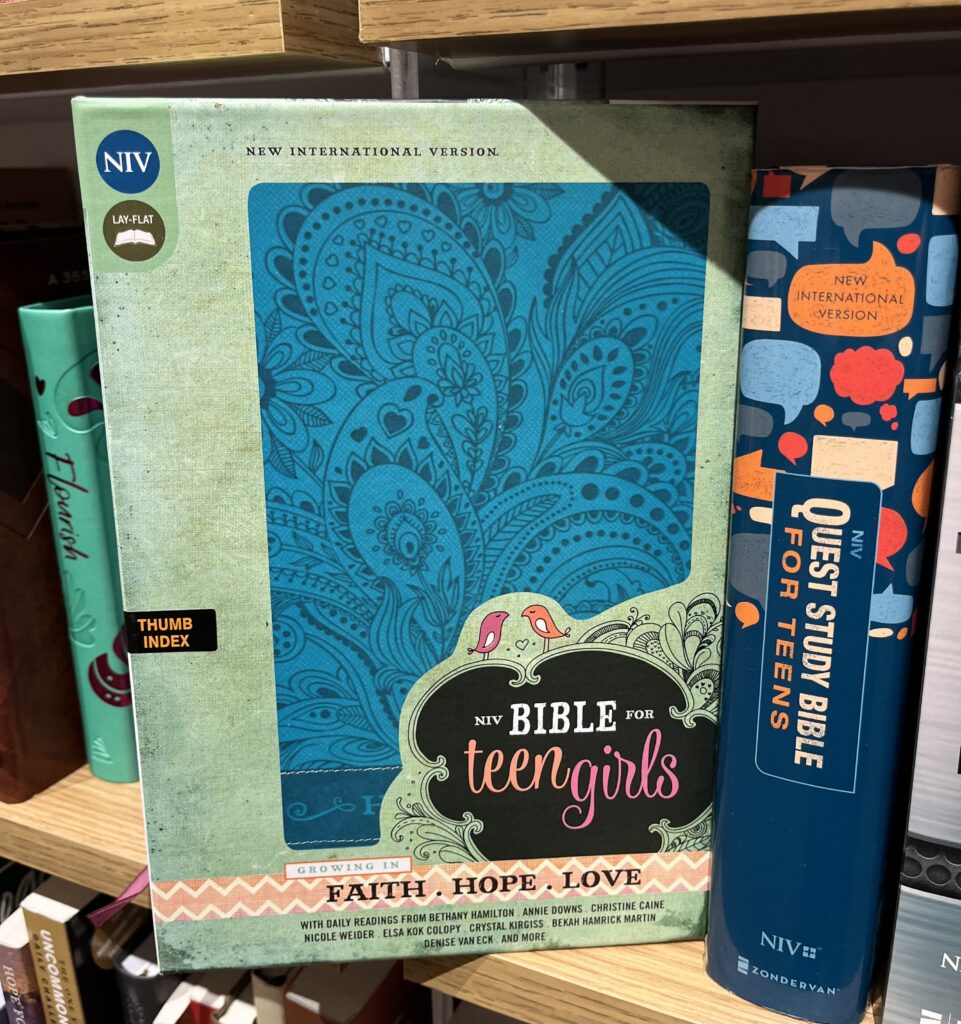
Publishers also produced a line of designer bibles which included “bible zines” – versions of the Old and New Testaments that were packaged for teenagers and had the look and feel of a high-end women’s or men’s magazine. If teens were to carry a traditional bible, most would undoubtedly be embarrassed to carry it among their peers. This might be okay for a teen, as children and teens might need a boost to get them to open a bible. However, how far should that go? Dault mentions the example of a woman walking into a bookstore looking for a bible that matched her outfit for Easter service.
The book executive that Dault interviews believes that, “the Bible as fashion doesn’t dilute the message at all…It’s just making that customer much more comfortable carrying it…they want something that is appropriate to either style or color or something that…gives them a level of comfort.” While it may not dilute the internal contents where the bible as text remains unchanged, it does affect the reverential approach of a Bible. The focus has shifted to a person’s preferences and comfort levels as opposed to a person’s spiritual curiosity or desire for what may be beyond the pages.
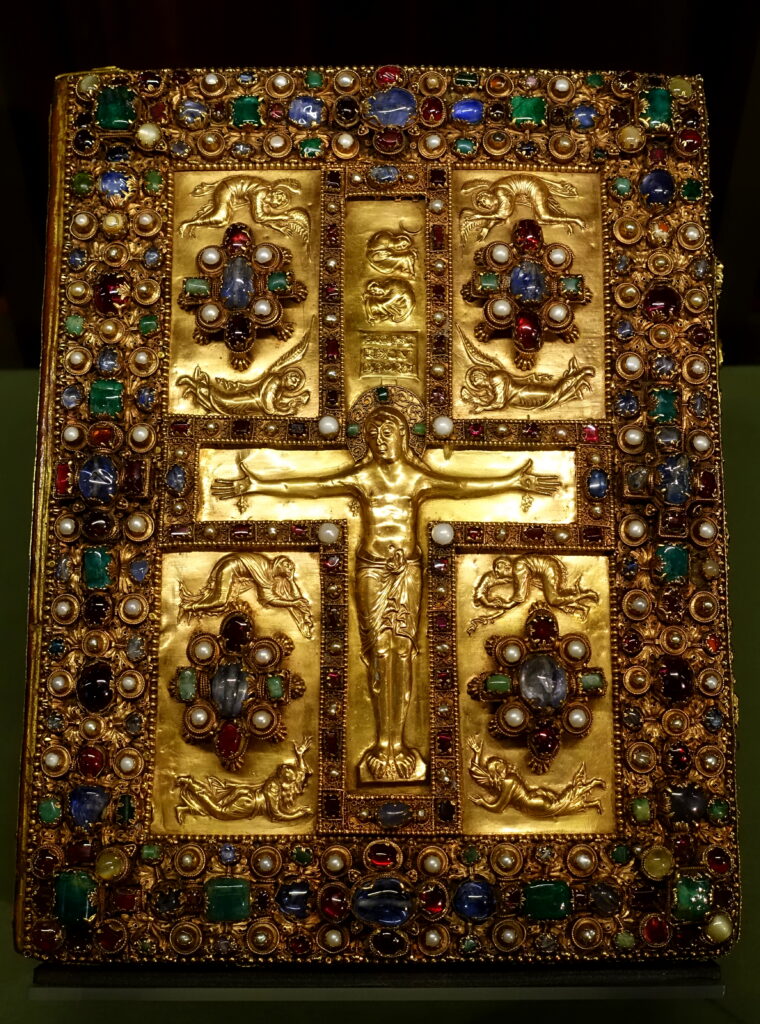
Decorated, beautiful bibles are nothing new, but their derivative source and reverential approach was quite the opposite in the early medieval period:
“The Scriptures, containing the most important words for Christians, were adorned with precious covers reflecting and conveying the spiritual value of their contents from the outside. The written word and the book form are a human medium carrying a heavenly message. Because of that, books received glittering and beautiful bodies that could be placed on the altar, together with the rest of the liturgical instruments [to make] God visible in the church. Jewelled books provide an enshrinement for words…clothing sacred scripture constituted an area of collaboration between religion and art, where art has the power to transform written texts into holy objects…Without even opening the book to read the words, one could already sense the importance and the otherworldly aura of what was hidden inside. These glittering covers made the sacred word present in all its glory. The Word literally became ‘flesh’ dwelling among us.” – Precious Stones in Religious Objects, 93-94
This is quite magnificent and awe-inspiring. The covers, instead of matching a woman’s dress, sought to bring the divine down to earth. Because of the powerful aesthetic nature of the covers, the powerful message contained within was able to seep through and emanate forth from its contents.

Sadly, the reverential approach is missing from today’s approach to bibles. Contrast the above with “for a bible-object to function in a marketplace, it must be desired.” There seems to be a huge gap here. The decorated Bibles from the past served a purpose which was to draw the soul upward, while today’s bibles should be appealing enough to purchase. The purpose of beauty in the theological sense should be to draw the soul upward. The consequence of beauty on a purely superficial level only pleases the flesh and leaves the spirit void. Thus, it is crucial to consider: Is the soul going upward or is it the bible used for mere appearances that don’t move the spiritual needle forward?
We can certainly use a beautifully covered or illustrated Bible to supplement the enjoyment of our devotional time. But there can also be a fine line to vanity, where we carry our bibles or have them on our dressers or bookcases only as accessories but there is no spiritual depth. We don’t really read the word or study its depths to be transformed. Thus, the Bible becomes just another accessory like a purse we carry in a particular season. The adorning of the Bible was due to what it contained within its holy pages to make visible its rich spiritual content as opposed to adorning the Bible to go with one’s outfit. It’s fine to purchase a Bible for its aesthetic appeal but if it’s only purchased for its aesthetic appeal alone, then it will collapse into simply an accessory. As Christians, the living Word should be foremost transforming us from the inside out and not outside in.
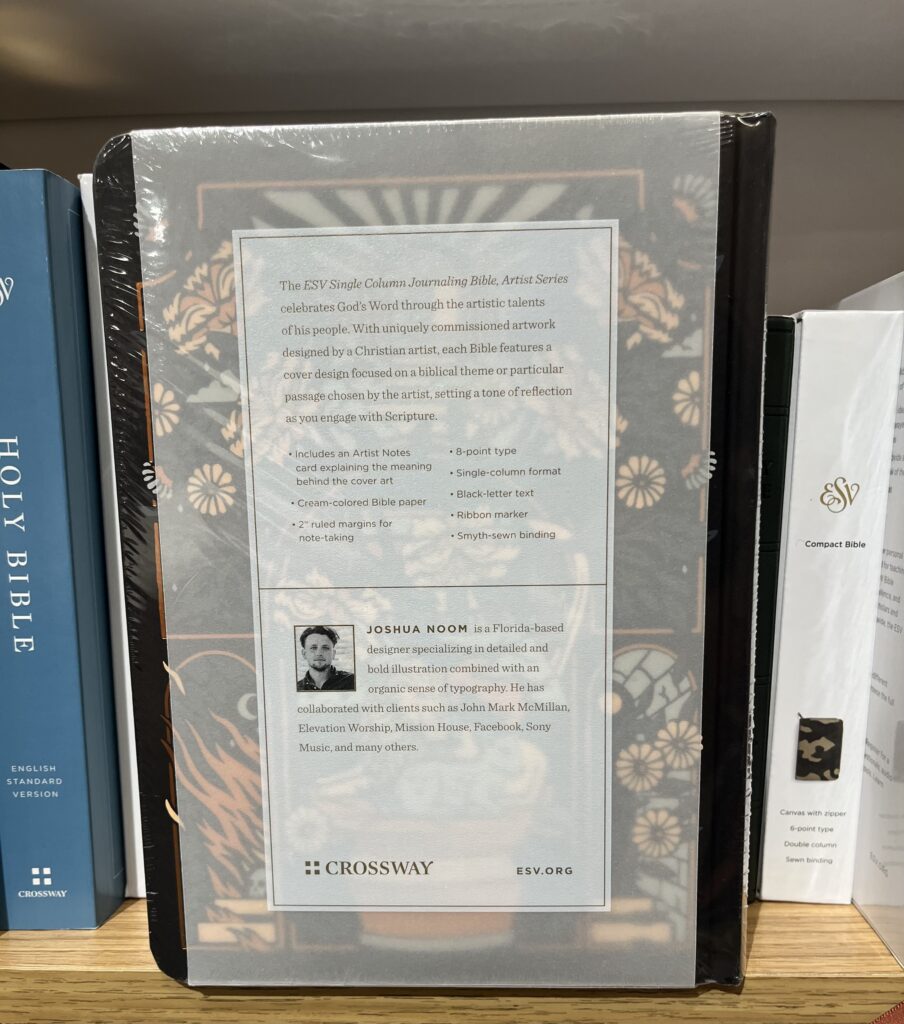
I think this a great example of a contemporary approach between aesthetics and the Bible:
This Artist Series celebrates God’s Word through the artistic talents of his people. With uniquely commissioned artwork designed by a Christian artist, each Bible features a cover design focused on a biblical theme or particular passage chosen by the artist, setting a tone of reflection